PHOSPHORIC ACID HEATER
Galiakotwala Engineering’s Alloy Phosphoric Acid Heater achieved 23% higher heat transfer efficiency and zero damaged or plugged tubes compared to the replaced Graphite Heater.
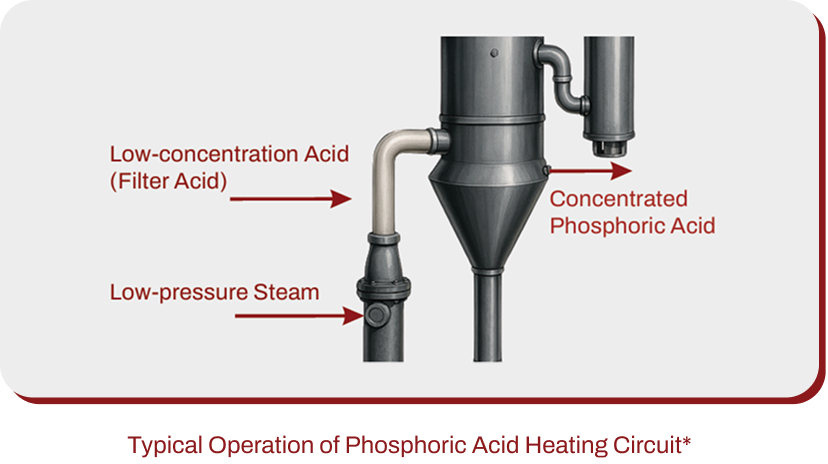
Phosphoric acid (H₃PO₄) is commonly concentrated from a dilute solution (~25-30%) to a higher concentration (~50-54%) in fertilizer and chemical plants. This is done using evaporation systems which includes a Shell and Tube Heat Exchanger.
How It Works
The Shell and Tube Heat Exchanger is used to heat the phosphoric acid, causing water to evaporate, thereby increasing acid concentration. Steam or hot water flows through the shell, while phosphoric acid flows in the tube (or vice versa depending on design). The heat causes partial evaporation of water content, leading to a higher concentration of phosphoric acid in the outlet stream.
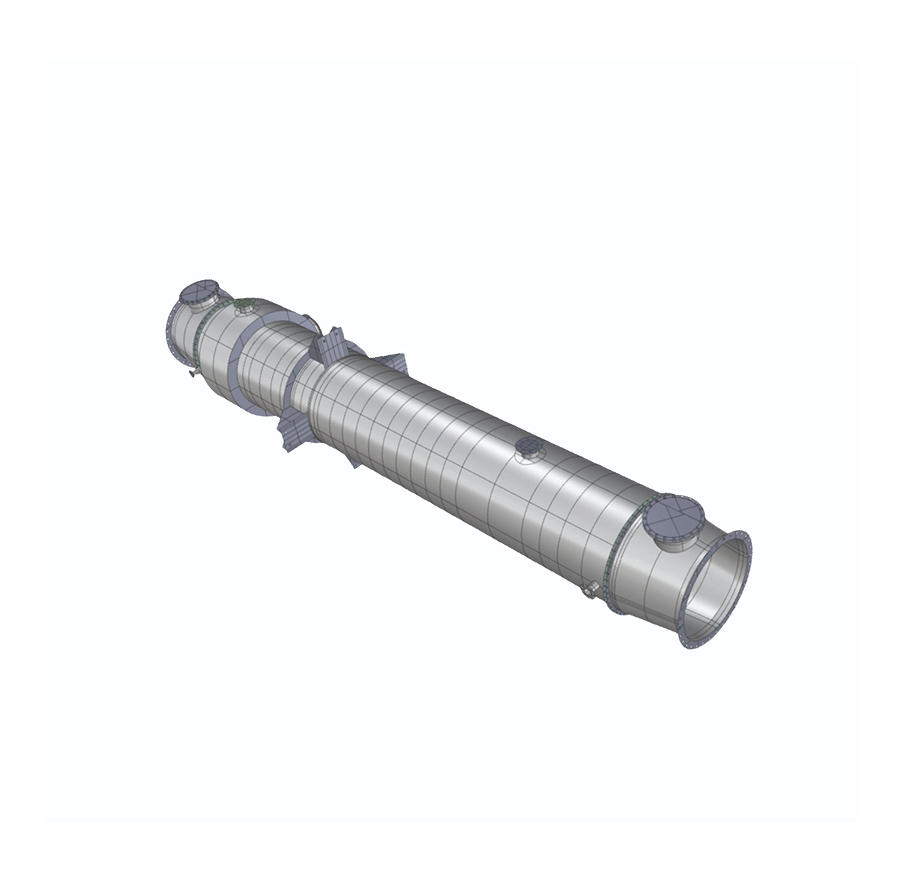
The key selection criteria for a new Phosphoric Acid Heater is material selection and design.
Challenge: Phosphoric Acid Impurities
Corrosion
Due to presence of Halides, Sulphuric / Phosphoric / Hydrochloric Acid and many more corrosive compounds.
Erosion
Due to Gypsum crystals, rock particles, Silica, etc. in turbulence and deposit formation.
Conventional technology uses Graphite to solve these problems. However, Graphite lacks mechanical strength. This leads to tube damage and failure of the Heat Exchanger and subsequent cleaning. This can further lead to plant shutdown and downtime.
A more advanced solution is a Phosphoric Acid concentrator using a special Metallic Alloy.
Comparison Between Graphite and Metallic Alloy Tubes
PARAMETER
GRAPHITE TUBES
ALLOY TUBES
Mechanical Strength
Resistance to Erosion-Corrosion
Tube Cleaning
Tube Wall Thickness
External Tube Diameter
Heat Transfer Efficiency
Brittle, prone to fracture during cleaning
Lower resistance compared to metallic alloys
Needs extreme caution to avoid fractures
Thicker walls required to avoid fracture
Larger diameter required for similar mechanical stability
Higher due to better thermal conductivity
Offers higher mechanical strength and greater resistance to erosion
Better resistance
Can handle high pressure water washing
Thinner walls possible due to higher strength
Smaller diameter possible due to higher mechanical strength
Can maintain efficiency with redesign (more tubes, thinner walls)
Advantages of Metallic Phosphoric Acid Heater
Based on the above comparison the advantages of Alloy Heat Exchangers over Graphite Heat Exchangers are:
Longer Life
- The life of Metallic heater is much longer than Graphite Heater.
Low Maintenance
- The maintenance cost of the Metallic Heater is much lower than that of the Graphite Heater.
Lesser Breakdown
- The efficiency of Graphite Heater goes down as damaged tubes have to be blocked, which affects production capacity.
Easier Tube Replacement
- Metallic Tubes can be replaced maintaining production capacity.
Advanced Design
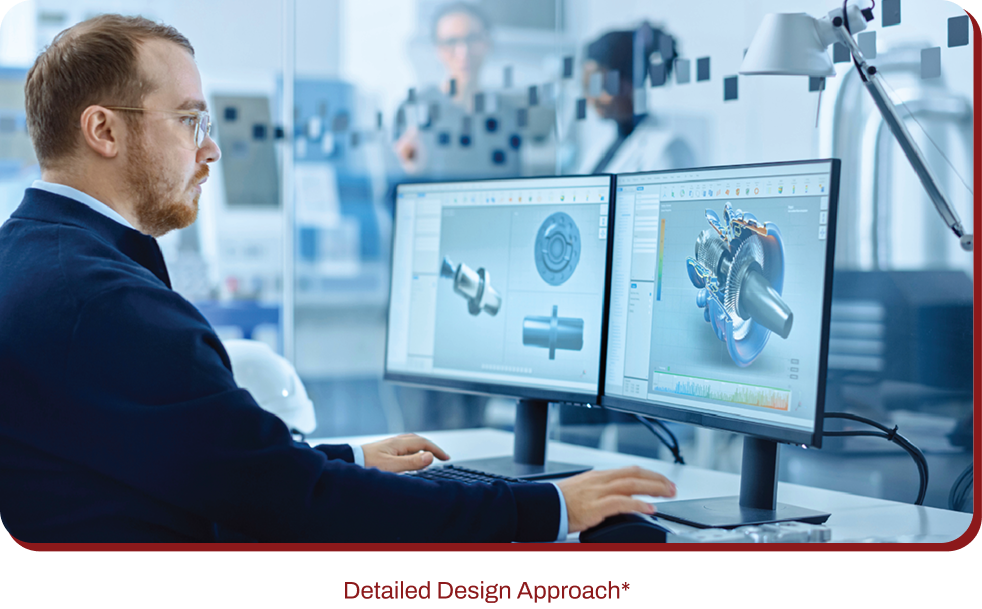
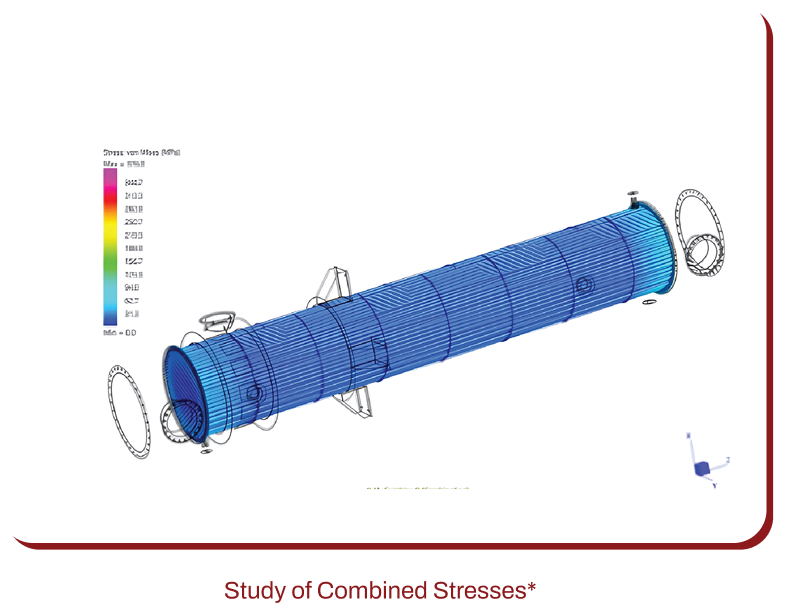
Galiakotwala Engineering uses sophisticated modelling software to ensure customized design for each and every Heat Exchanger to ensure it performs as required.
What Our Customers Say
“I am pleased to report that since installing the GEC BMW Type Candle Filter in our Interpass Absorption Tower (IPAT) at our Sulphuric Acid Plant in 2019, it has performed exceptionally well. We have not observed any acid condensate at the outlet of the IPAT, indicating the filter is effectively removing any impurities.”
Manager SAP Plant
Birla Copper
“We were facing mist carryover problems in the Drying Tower for a long time. We discussed the problem with the Galiakotwala Technical Services (GTS) Technical team.They studied the issue and gave the solution of an advanced Demister Pad of SX Wire Mesh for Drying Tower and solved this prolonged problem permanently.”
General Manager (Auxiliary),
Century Rayon
“Galiakotwala Engineering Company has provided us with the best solution in form of Alloy Piping to get rid of continued issues of leakage in conventional Sulphuric Acid Piping. After installation of the Alloy Piping, we observed zero leakage and significant cost savings due to reduced downtime. Since then we have changed most of our Acid Piping in both Sulphuric Acid Plants at Haldia with their low corrosion alloy.”
General Manager (Engineering),
Tata Chemicals Limited, Haldia
“We wanted to replace our old Brick-Lined Acid Towers with a newer technology due to difficulty in location and repair of leaks in these Acid Towers. GEC gave a solution of an complete Alloy Tower 7500 mm in diameter including all internals such as Distributor, Mist Eliminators, Packing and Support, etc. We are happy to note we have observed no corrosion in last 7 years and achieved 99.99% absorption efficiency.”
JSC Apatit,
Russia
“We were continuously facing excess mist generation and moisture carryover problems in FAT and DT with the conventional distributors. Galiakotwala Engineering Company (GEC) replaced conventional distributors with Alloy Distributors in 2004. Since then, there is no change in the thickness and deformation of hole sizes of the branch pipes of the distributor. We appreciate the quality of work and and the materials used by GEC even after 18 years of operation.”
Deputy General Manager (Mechanical),
Paradeep Phosphates Limited
“We are using your Vane Separators for the last 15 years and have never faced any issues in the performance or life of the equipment. We are thankful to the Galiakotwala team for designing the special type Vane Separators according to our requirement that continues to ensure our process operates.”
Sr. Manager (Mechanical),
TATA Steel
“In 1987, Galiakotwala Engineering Company (GEC) provided our first Shell and Tube Type Heat Etxchanger with the assurance of an advanced, efficient design and manufactured with a low-corrosion alloy that would extend its lifespan. Even after 30+ years of trouble-free operation, the Heat Exchangers are still functioning effectively. We are pleased to report that GEC adhered to their commitments.”
Vice President Technology
Dharamsi Morarji, Roha